Ask before you eat
Everything You Wanted to Ask About Filipino Food
Filipino food is the most under-explained great cuisine in Britain. Here is what people ask us most, answered plainly — from what adobo tastes like to how a boodle fight actually works.
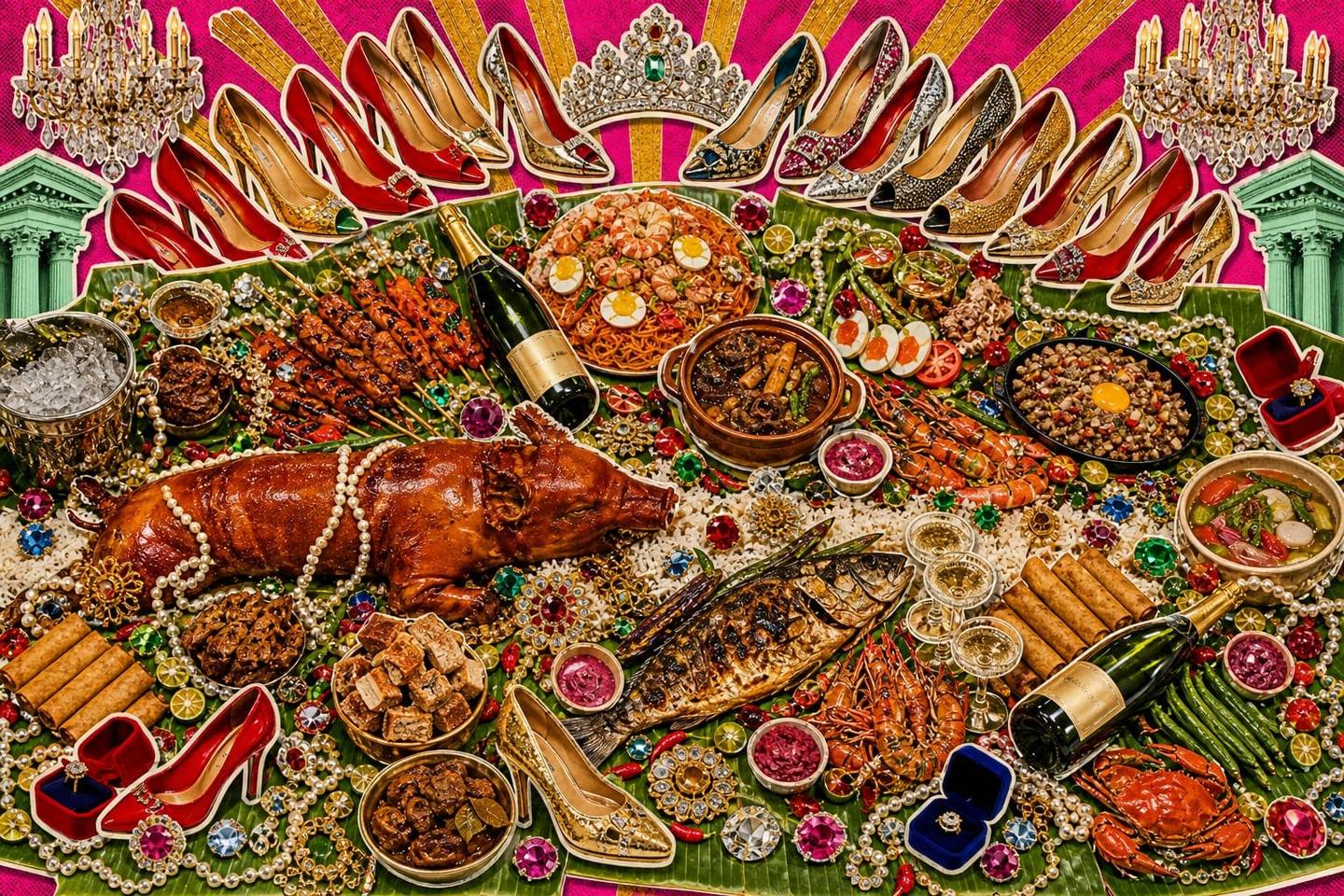
The basics of one of Southeast Asia's most distinctive cuisines.
Filipino food, explained
What is Filipino food?
Filipino cuisine brings together indigenous traditions and centuries of regional and international influence. Expect grilled meats, rich stews, noodles, seafood, rice, sharp citrus, vinegar, garlic and a distinctive balance of savoury, sour and sweet flavours.
What does Filipino food taste like?
Sour, salty, sweet and smoky, usually in the same meal and often on the same plate. Vinegar, soy, garlic and citrus do most of the heavy lifting, balanced by rice. It is bold without being fiery, and comforting rather than delicate.
Is Filipino food spicy?
Not all Filipino food is hot. Many dishes focus more on savoury, sour, sweet and smoky flavours. Mark genuinely spicy dishes on the menu and let guests know where heat can be adjusted.
How is Filipino food different from Chinese, Thai or Malaysian food?
Filipino cooking shares noodle and dumpling traditions with China and a rice-and-seafood backbone with its neighbours, but it leans on vinegar and citrus where Thai cooking leans on chilli, lemongrass and coconut. Three centuries of Spanish rule also left their mark, from adobo to leche flan.
What is adobo?
Adobo is the closest thing the Philippines has to a national dish: meat braised in vinegar, soy sauce, garlic, black pepper and bay until it is tender and glossy. Every family makes it slightly differently, and every family is convinced theirs is correct.
What is sisig?
Sisig is chopped pork, traditionally from the head and cheek, cooked until crisp then finished with onion, chilli and citrus and served sizzling. It started in Pampanga as a way to waste nothing and became the most ordered dish in the country's beer houses.
What is pancit?
Pancit is the Filipino family of noodle dishes, stir-fried with vegetables, meat or seafood and finished with calamansi. It is traditionally served at birthdays, where the long noodles stand for long life.
What is halo-halo?
Halo-halo means mix-mix. It is a layered dessert of shaved ice, evaporated milk, sweet beans, jellies, fruit and often ube or leche flan, served in a tall glass and eaten by stirring everything together.
What is kamayan?
Kamayan means eating with your hands, the traditional way of sharing a Filipino meal. Rice is gathered with the fingers and eaten alongside grilled meat, fish and sauces. It is informal, sociable and entirely optional.
How the communal feast works, and what to expect at the table.
The boodle fight
What is a boodle fight?
A boodle fight is a communal Filipino feast, traditionally arranged over banana leaves for the whole table to share. It is informal, abundant and ideal for groups and celebrations. How the boodle fight works →
Where does the boodle fight tradition come from?
It comes from the Philippine military, where officers and enlisted soldiers ate the same food from the same table with no rank, no cutlery and no queue. The name stuck, and the format moved out of the mess hall and into family celebrations.
Do I have to eat with my hands?
No. Eating by hand is part of the Filipino kamayan tradition and guests are welcome to join in, but cutlery is always available.
Is a boodle fight suitable for a first visit to Filipino food?
It is arguably the best introduction, because you taste a spread rather than committing to one dish. Grilled meat, seafood, vegetables, rice and sauces arrive together, so a table of first-timers can work out what they love without ordering blind.
Tables, big parties and celebrations.
Booking and groups
How do I enquire about a group booking?
Send the details through the group bookings page — party size, date, occasion and any dietary needs — and we will come back to you with formats and timings. Send a group enquiry →
Getting to 1421 Pershore Road, and what to expect when you arrive.
Finding us in Stirchley
Where are you?
Boodle Fight is at 1421 Pershore Road, Stirchley, Birmingham, B30 2JL, on the main high street run through Stirchley. Directions and opening hours →
How do I get to you by train?
Bournville station on the Cross-City Line is roughly a ten minute walk away, which puts us a few stops from Birmingham New Street, University and Selly Oak.
Which buses stop nearby?
The 45 and 47 run along Pershore Road between the city centre and Cotteridge, and the 11A and 11C Outer Circle services pass through Stirchley.
Still hungry for answers?
Book a table, send a group enquiry or just come and taste it for yourself.